Advanced Surveying Technologies Shaping India's Landscape with Modern Surveying Techniques

Surveying is a critical step in infrastructure development. It provides accurate data for planning, design, and construction. In India, the landscape is rapidly changing due to urbanization and infrastructure projects. To keep pace, modern surveying techniques are being adopted. These technologies improve precision, reduce time, and lower costs. This article explores the advanced surveying technologies shaping India's landscape and how they benefit infrastructure projects.
The Role of Modern Surveying Techniques in Infrastructure Development
Modern surveying techniques have transformed how land and structures are measured. Traditional methods relied on manual tools and calculations. Today, technology offers faster and more accurate alternatives. Some key modern techniques include:
Global Navigation Satellite Systems (GNSS): These systems use satellites to provide precise location data anywhere on Earth. GNSS receivers are common in land surveying.
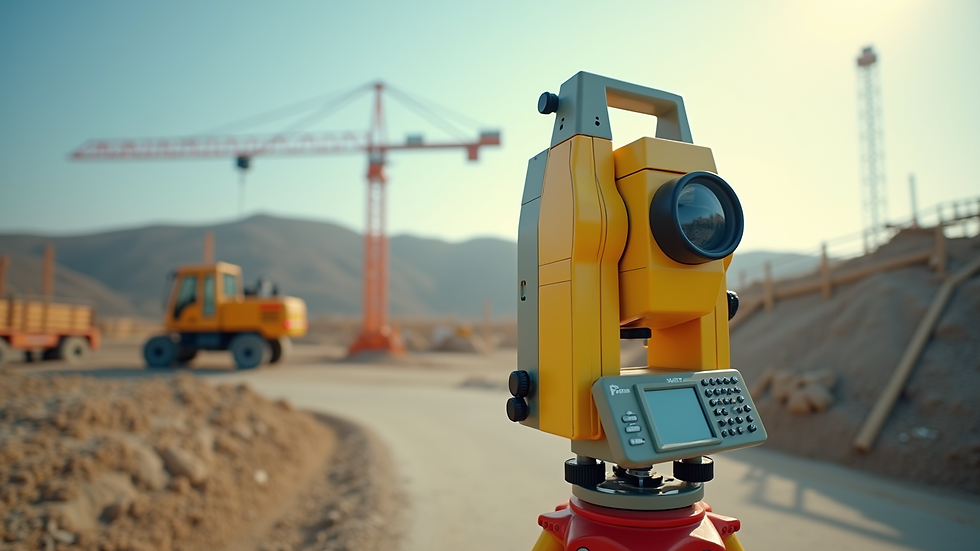
Total Stations: These electronic/optical instruments measure angles and distances with high accuracy. They combine the functions of a theodolite and an electronic distance meter.
LiDAR (Light Detection and Ranging): LiDAR uses laser pulses to create detailed 3D maps of terrain and structures. It is useful for topographic surveys and vegetation analysis.
Unmanned Aerial Vehicles (UAVs) or Drones: Equipped with cameras and sensors, drones capture aerial images and data quickly over large areas.
3D Laser Scanning: This technology captures precise 3D models of buildings and infrastructure, aiding in design and renovation.
These techniques reduce human error and improve data quality. They also enable surveys in difficult or hazardous locations. For infrastructure developers, this means better project planning and risk management.

Benefits of Using Modern Surveying Techniques in India
India's diverse geography and rapid development require adaptable surveying methods. Modern techniques offer several advantages:
Speed and Efficiency: Automated data collection speeds up surveys. For example, drones can cover large areas in hours compared to days on foot.
Accuracy: Technologies like GNSS and total stations provide centimeter-level precision. This accuracy is crucial for infrastructure alignment and safety.
Cost Savings: Faster surveys reduce labor costs and project delays. Early detection of site issues prevents expensive rework.
Data Integration: Digital data from surveys can be integrated with Geographic Information Systems (GIS) and Building Information Modeling (BIM). This integration supports better decision-making.
Accessibility: Remote sensing tools allow surveys in inaccessible or hazardous areas, such as steep slopes or flood zones.
These benefits align with the goals of companies like KASSAR ENTERPRISES, which focus on delivering comprehensive geospatial and civil engineering solutions. Using modern surveying techniques helps clients plan and execute projects with confidence.
Key Technologies Driving Advanced Surveying in India
Several technologies are at the forefront of advanced surveying in India. Understanding their applications helps infrastructure professionals choose the right tools.
Global Navigation Satellite Systems (GNSS)
GNSS includes systems like GPS (USA), GLONASS (Russia), Galileo (Europe), and BeiDou (China). Surveyors use GNSS receivers to determine precise coordinates. In India, GNSS is widely used for:
Land boundary surveys
Road and railway alignment
Utility mapping
GNSS receivers can be handheld or mounted on vehicles. Real-Time Kinematic (RTK) GNSS provides real-time corrections for centimeter accuracy.
Total Stations
Total stations measure horizontal and vertical angles and distances. They are essential for:
Construction layout
Topographic surveys
Monitoring structural movement
Modern total stations are robotic and can be controlled remotely, increasing efficiency.
LiDAR
LiDAR systems emit laser pulses and measure the time taken to reflect back. This creates detailed 3D point clouds of terrain and objects. LiDAR is used for:
Floodplain mapping
Urban planning
Forest management
Airborne LiDAR mounted on helicopters or drones covers large areas quickly.
Drones (UAVs)
Drones equipped with high-resolution cameras and sensors capture aerial images and videos. They are used for:
Site reconnaissance
Progress monitoring
Creating orthomosaic maps
Drones reduce the need for manual surveys in dangerous or hard-to-reach areas.
3D Laser Scanning
3D laser scanners capture millions of points on surfaces to create accurate 3D models. Applications include:
Building information modeling (BIM)
Heritage conservation
Infrastructure inspection
This technology supports detailed design and maintenance planning.

Implementing Advanced Surveying Technologies: Practical Recommendations
Adopting advanced surveying technologies requires careful planning. Here are some practical steps for infrastructure projects:
Assess Project Needs: Determine the level of accuracy and data detail required. Choose technologies that fit the project scale and terrain.
Train Personnel: Skilled operators are essential for effective use of modern equipment. Invest in training and certification.
Integrate Data Systems: Use software that supports data import from GNSS, LiDAR, drones, and scanners. GIS and BIM platforms enhance data utility.
Plan for Data Management: Large datasets require proper storage, processing, and backup solutions.
Ensure Compliance: Follow local regulations for drone flights and data privacy.
Partner with Experts: Collaborate with specialized geospatial consultancies for complex surveys.
By following these recommendations, projects can maximize the benefits of advanced surveying technologies.
Future Trends in Surveying Technologies in India
Surveying technology continues to evolve. Some emerging trends likely to impact India's infrastructure sector include:
Artificial Intelligence (AI) and Machine Learning: AI can automate data processing and detect anomalies in survey data.
Internet of Things (IoT): Connected sensors can provide real-time monitoring of infrastructure conditions.
Augmented Reality (AR): AR can overlay survey data on physical sites for better visualization.
Cloud Computing: Cloud platforms enable easy sharing and collaboration on survey data.
Enhanced Drone Capabilities: Longer flight times and improved sensors will expand drone applications.
Staying updated with these trends will help infrastructure developers maintain competitive advantages.
Embracing Technology for Better Infrastructure Outcomes
The integration of modern surveying techniques is essential for successful infrastructure development in India. Technologies like GNSS, LiDAR, drones, and 3D scanning provide accurate, timely, and cost-effective data. This data supports better planning, design, and construction management.
For companies aiming to lead in civil engineering and geospatial consultancy, leveraging these technologies is a strategic priority. By adopting advanced surveying methods, projects can reduce risks, improve quality, and meet deadlines.
For those interested in exploring these solutions further, resources on advanced surveying india offer detailed insights and services tailored to the Indian context.
Modern surveying techniques are not just tools - they are enablers of progress. Embracing them will shape India's landscape for years to come.


Comments